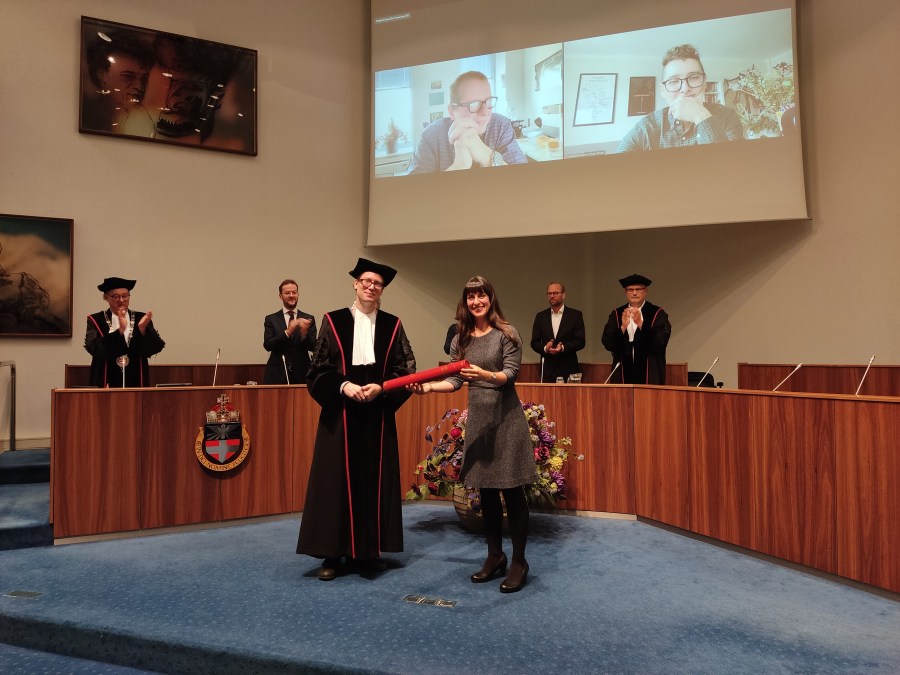
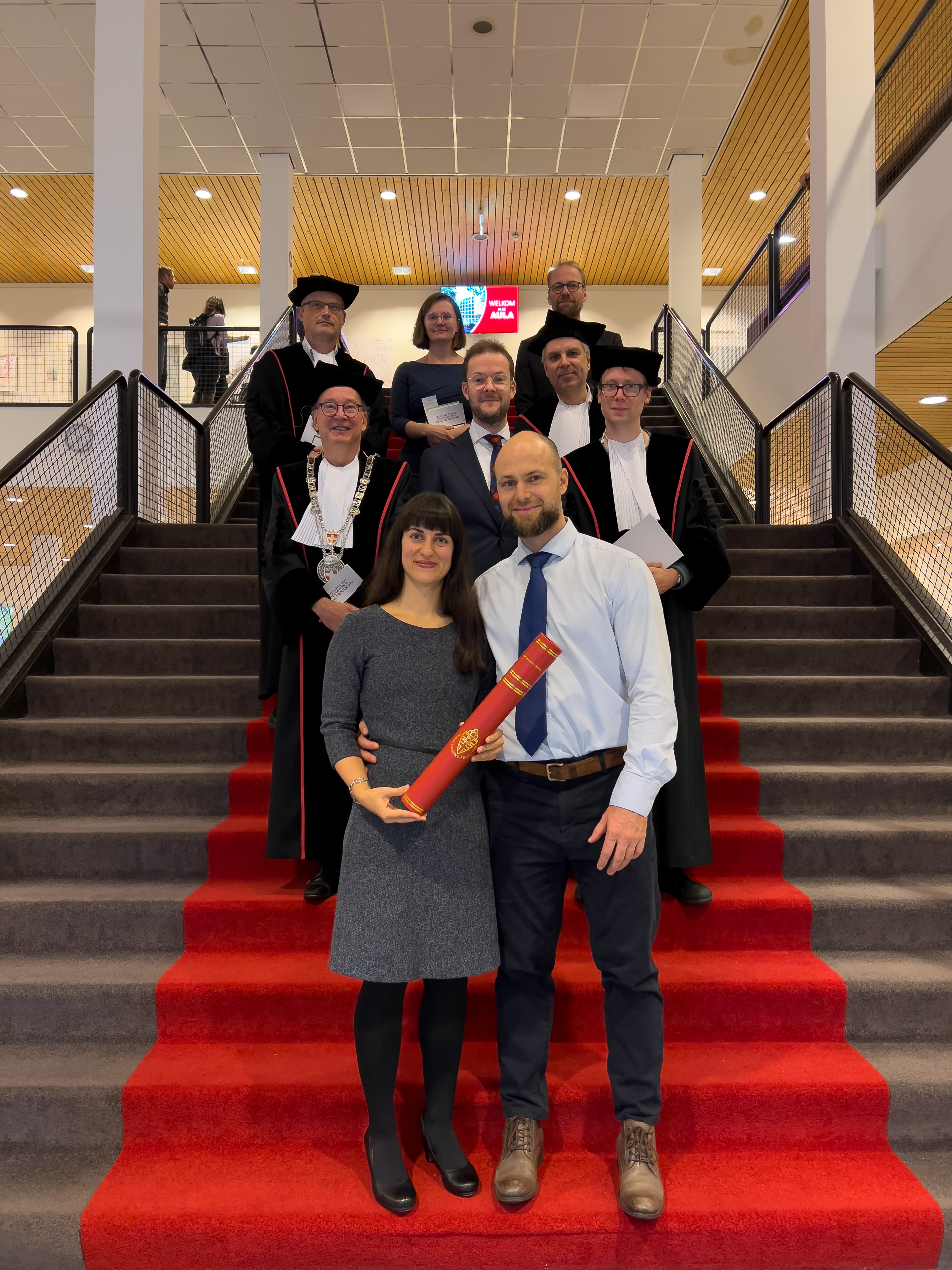
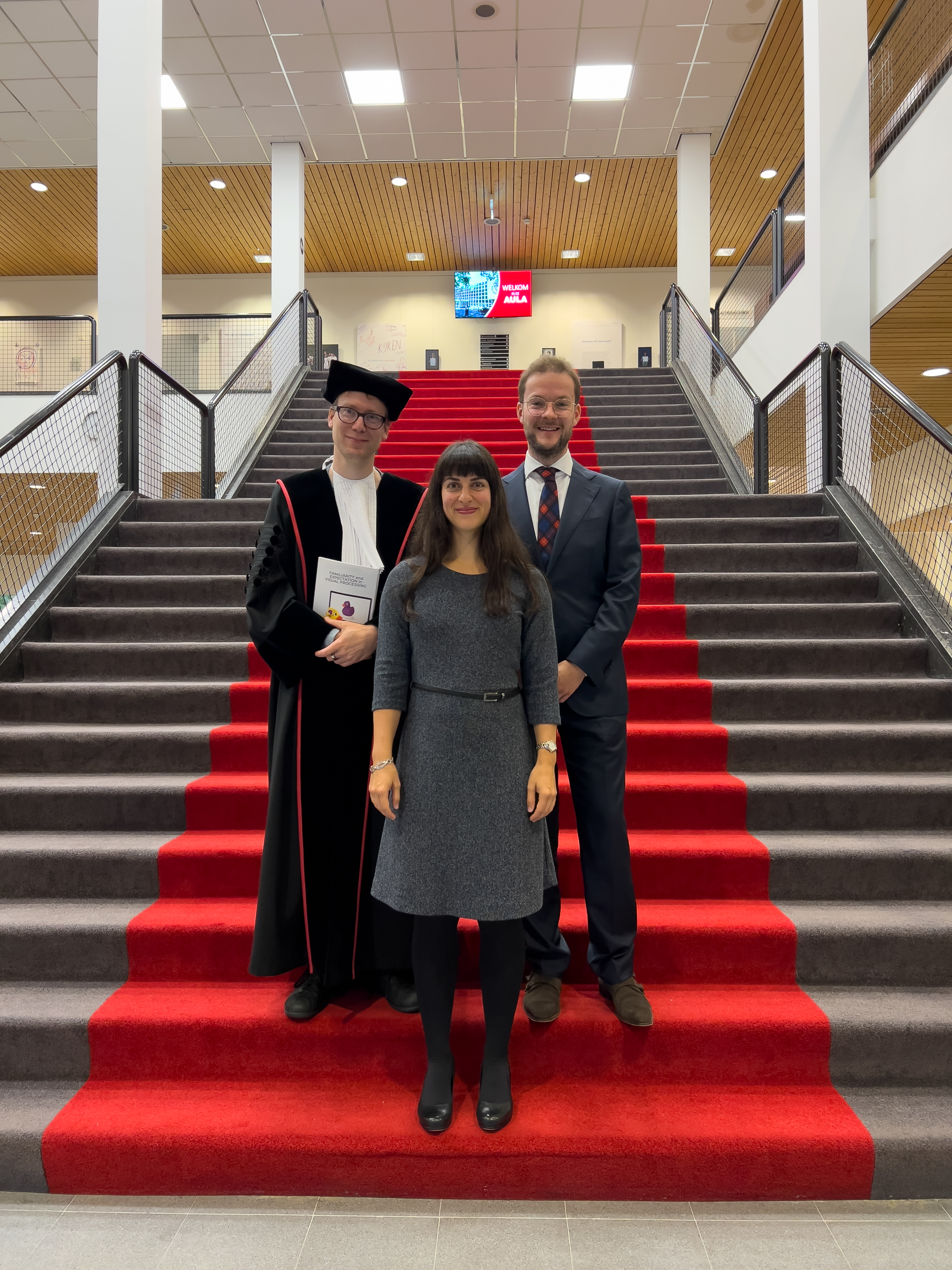
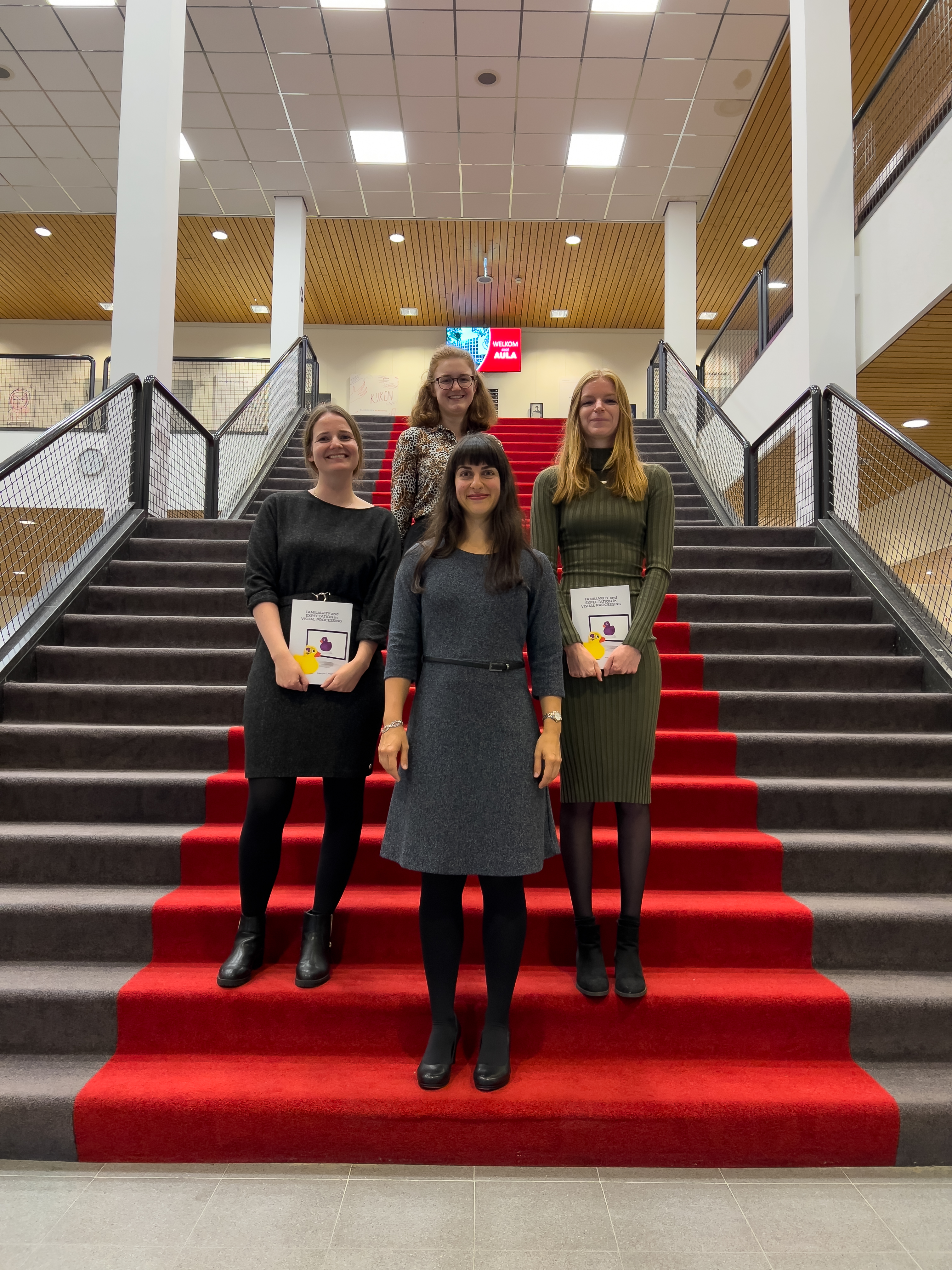
It’s official: I defended my PhD dissertation, and now I’m Dr. Manahova! Crazy…
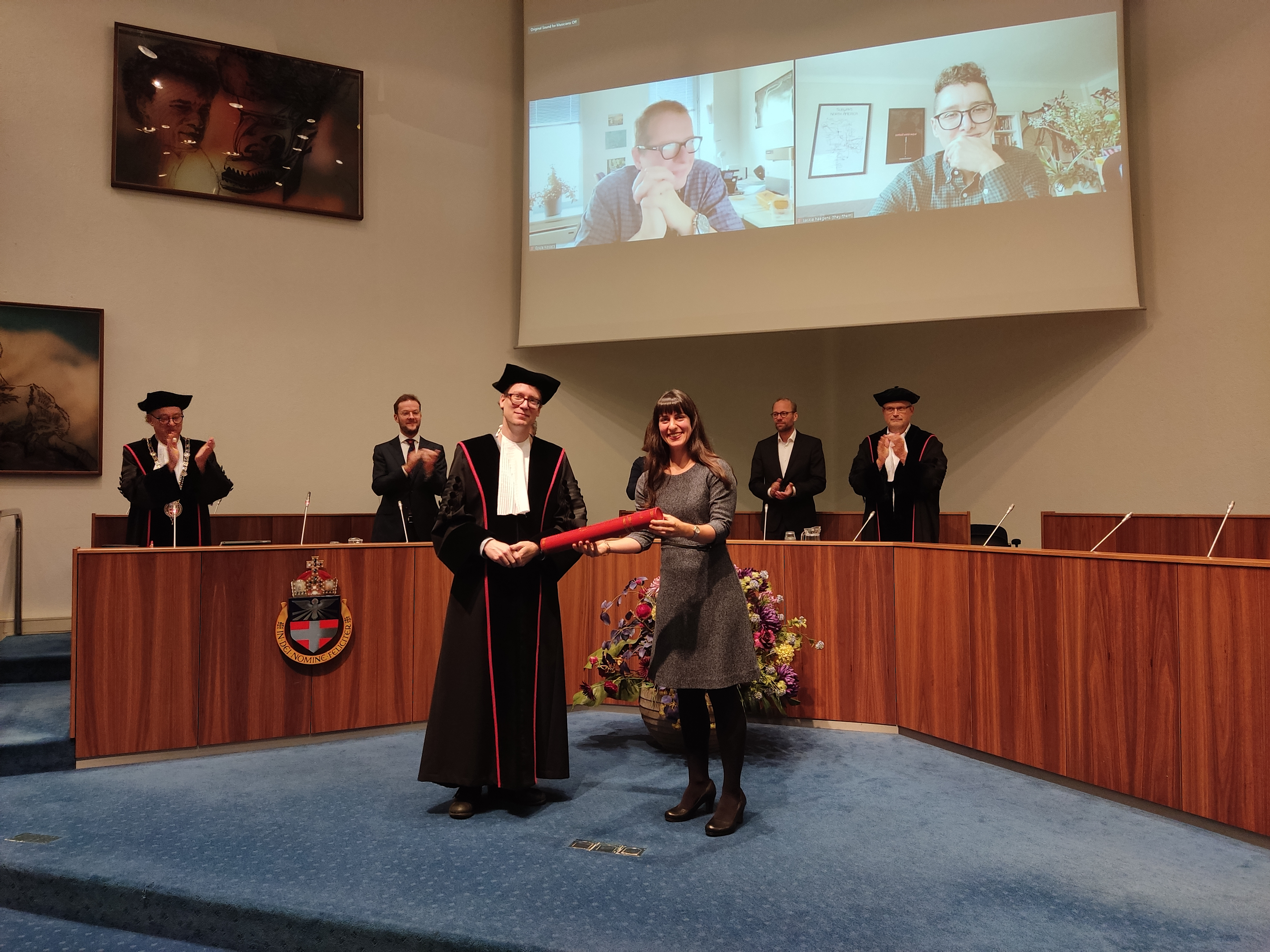
The defense itself was a great experience, actually. I was nervous, for sure, but more than that I was excited. While I was a bit anxious to find the right answer to each question, I also enjoyed the dialogue. And at the end when I was awarded the PhD degree, it was exhilarating!
Practice makes progress
I will stay away from saying, “practice makes perfect” because my defense certainly wasn’t perfect. But I think the reason I was able to feel excited instead terribly anxious is that I had practiced and prepared.
At the beginning of my defense, I presented a 10-minute summary of my work. Oh, had I practiced and practiced it! For one week before the defense, I practiced my presentation once a day every day. In fact, I really don’t like practicing presentations; I don’t know why, but I never have. However, I made a promise to myself that I’d practice it every day because I knew it would help me stay calm and feel prepared, and I kept that promise.
On the day of the defense (this past Monday), I practiced my presentation three times one after the other. It felt very silly to practice the same talk three times in a row, but I felt myself improving with every repetition, and that boosted my confidence.
During the two weeks prior to the defense, I also read up on some recent papers related to my work. This gave me a feeling that I was up to date with the field (to some extent), but there was also another unexpected benefit: during the defense itself, some of my answers were inspired by the papers I had read in the previous two weeks. These were new ideas that went beyond what I had written in my thesis, so I believe they contributed to a more interesting discussion with the committee members.
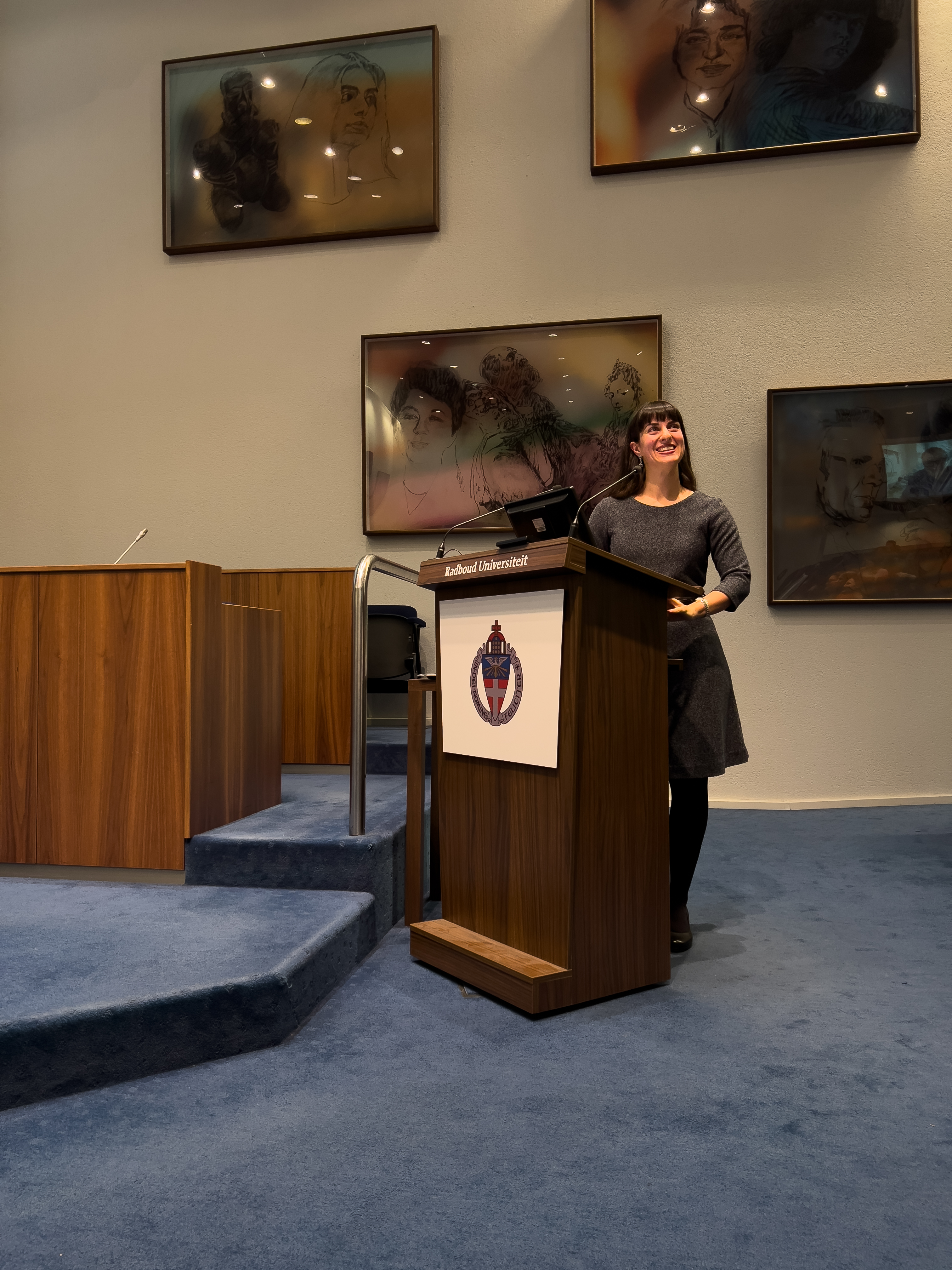
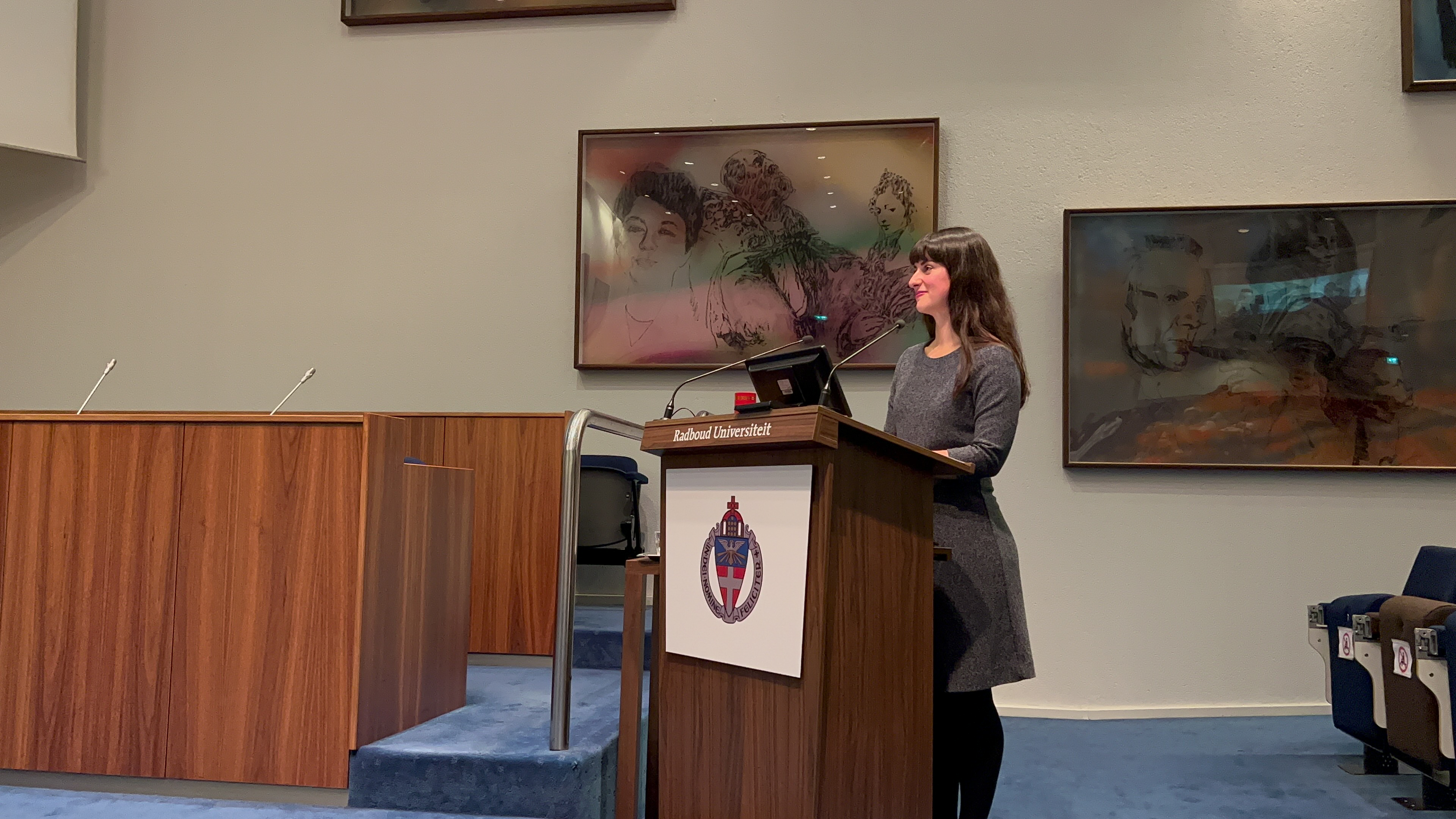
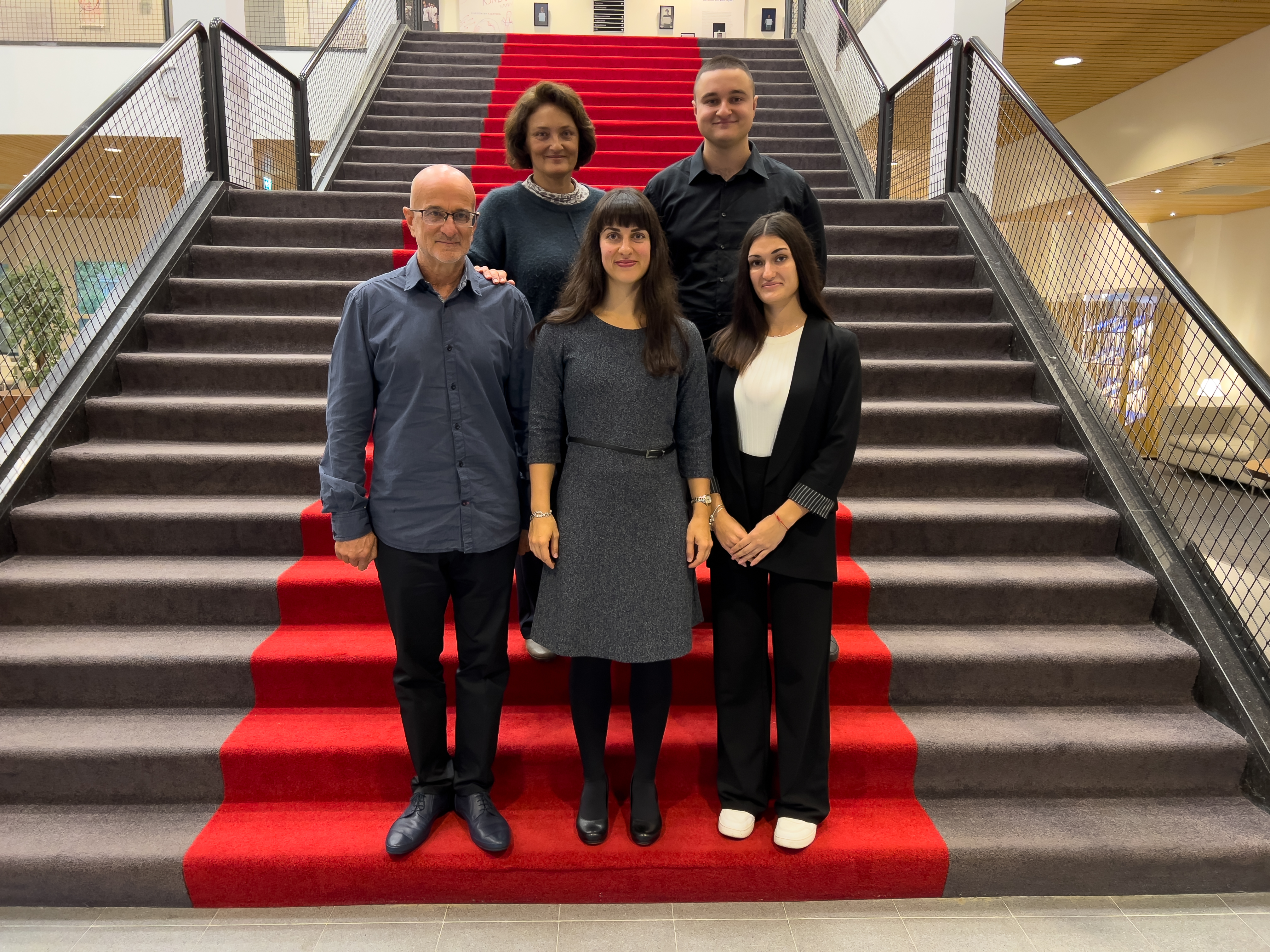
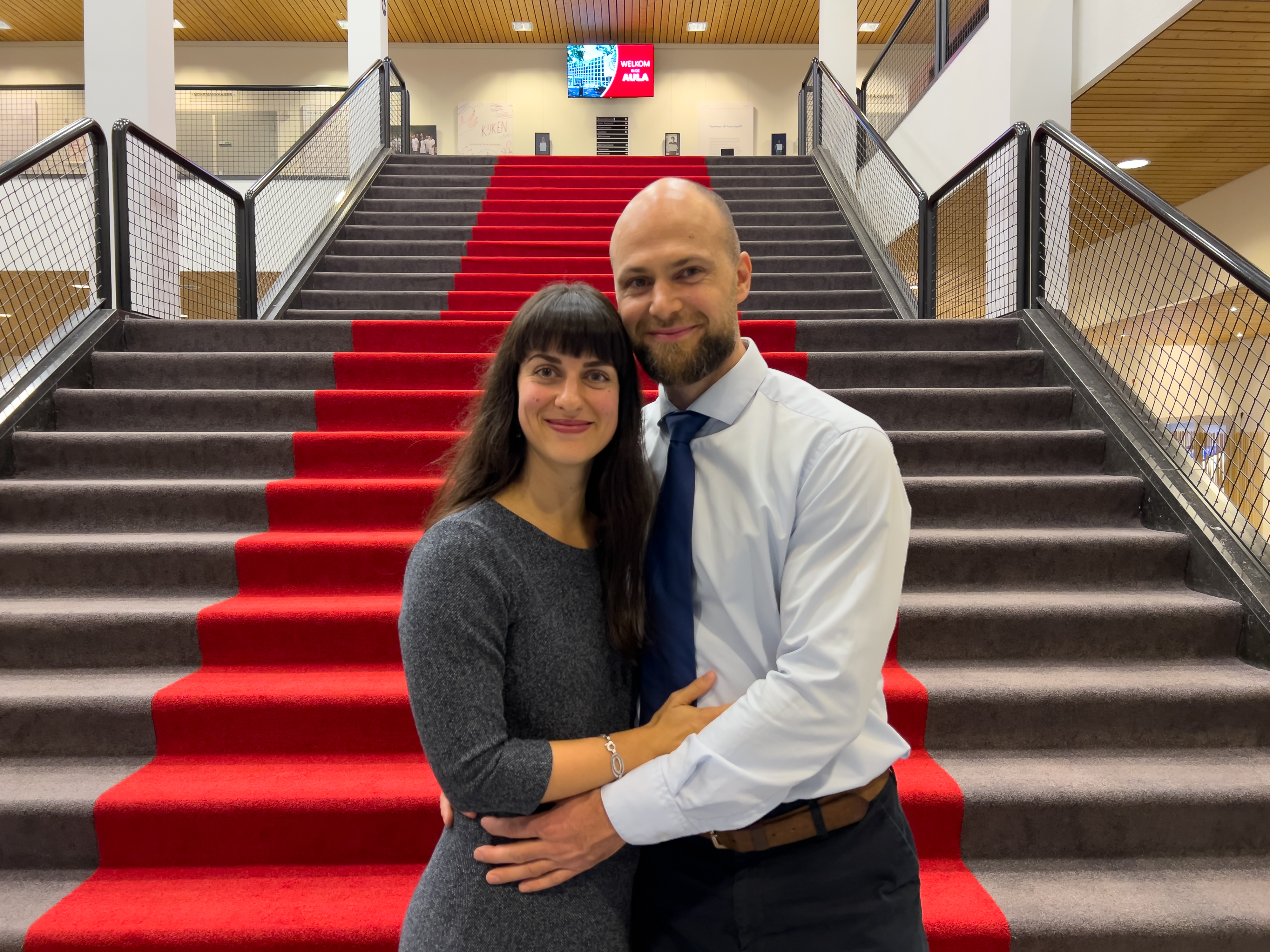
Answering questions during my PhD defense.Receiving my PhD diploma!
The end of a massive chapter
My PhD defense marked the end of a long, important chapter in my life. I began my master’s in cognitive neuroscience in September 2014, then started my PhD in the same area in October 2016, and now finally defended my doctorate in October 2022. Wow, that’s eight years of my life! I truly can’t believe it.
I’ve learned so much during this time, and I’ve had so many great experiences. My supervisors were amazing, and my colleagues were so, so cool. I didn’t quite figure out the mystery of the brain, but I’d like to think I advanced our understanding, albeit a tiny bit.
Now that this chapter has come to an end, I am ready for the next one. There’s something bittersweet about transitions, and there’s something exhilarating too. It feels like everything is possible. I can’t wait to see what comes next. At the same time, I think I’ll take a little break and rest for a few days–it has been wonderful but intense!
By the way, if you’d like to check out my PhD dissertation, you can find it here.
We got a white board at home. Oh, the joy! Jacob wanted to get it because he thought he’d need it for work. I was trying to hide my enthusiasm as he was ordering it, and I didn’t tell him I’d be taking over it, haha!
We’ve needed something like this for a long time. We do our family planning in our shared google calendar and our shared lists on To Do, but we noticed we needed some sort of visual reminder in our home about some specific home tasks.
We’re also making an effort to spend less time on our phones when we’re having family time in the evenings, so we can’t see reminders on our phones and can’t check our calendar or to do list. Once we’re finished with work and we’re home with William for the evening, our phones go in the Phone Box. We take them out if we actually need them, but then we put them right back in the box. This avoids mindless scrolling on the phone when we could in fact be connecting as a family.
This is our phone box.
This is where the white board comes in
There are two columns on the white board: ‘Tasks J’ and ‘Tasks M.’ We can each put tasks underneath each column, which gives us the ability to assign each other tasks and give each other reminders without nagging–this is key!
For instance, I am in charge of the food menu, so I know what needs to be cooked each day. We also buy lots of frozen foods (meat, fish, fruits, and vegetables) because they tend to be cheaper for the same or even more nutrients than the conventional options. The evening before we’re going to cook something, I think about what needs to be defrosted, and I put it on Jacob’s tasks. (Jacob is in charge of defrosting stuff because he’s very good with packing stuff in the freezer, and he has a special system for what goes where. Clearly, I’m not the only organization nerd in our house.)
An example of what our white board looked like this Thursday.
Why don’t I just tell Jacob what he needs to defrost, you may ask? Haha. Are you married or living with someone, I’d ask? Often when I tell him to do something, he may not want to do it, he may be in the middle of something else, or he may not even be home from work yet. It’s so much easier to put the reminder or task in an external holding space, so I don’t have to do any reminding or nagging myself.
So when Jacob is home and is ready to deal with the tasks for that evening, he checks the white board and then does them in his own time. The other most common tasks for him on the board are, ‘Empty trash’ and ‘Cook sweet potatoes’ (he’s the sweet potato master!).
Funny enough, he doesn’t write down tasks for me very often. Usually, he apps me a request for something, and I put it on my to do list or on the board. That’s just how it goes. I look forward to the day when he puts a task on my white board list though!
By the way, William also wanted to have his own column for tasks he needs to do. So I made him a column with tasks such as, ‘Play,’ ‘Tidy up,’ and ‘Clean’ (he loves cleaning with a handheld vacuum cleaner). Let’s see how long this fascination lasts.
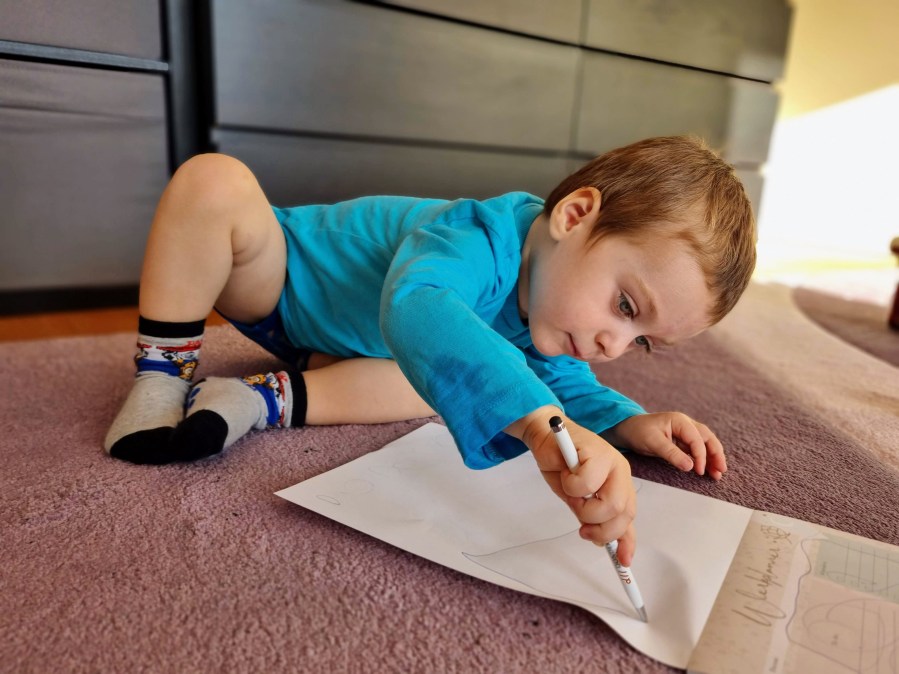
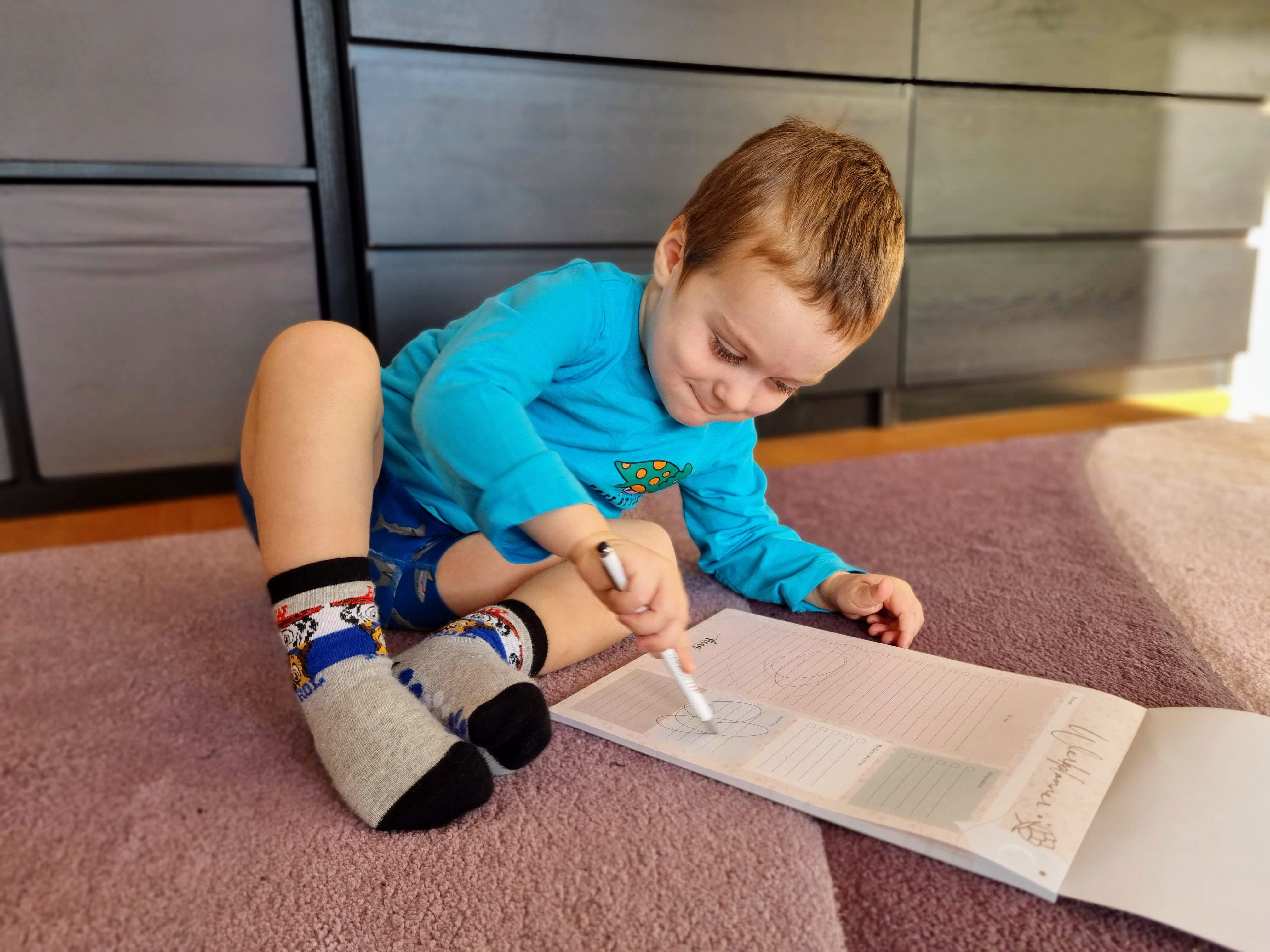
Naturally, William also loves drawing on the white board, but yesterday he ended up drawing on the wall underneath the white board as well. Clearly, there are drawbacks to using a white board…
Okay, I’ll admit it. I’ve been doing daily planning on paper. Dan-dan-daaaaaaan!
Why so low-tech, you may ask, when I usually use digital tools? And that is a good question indeed.
The digital tools I use
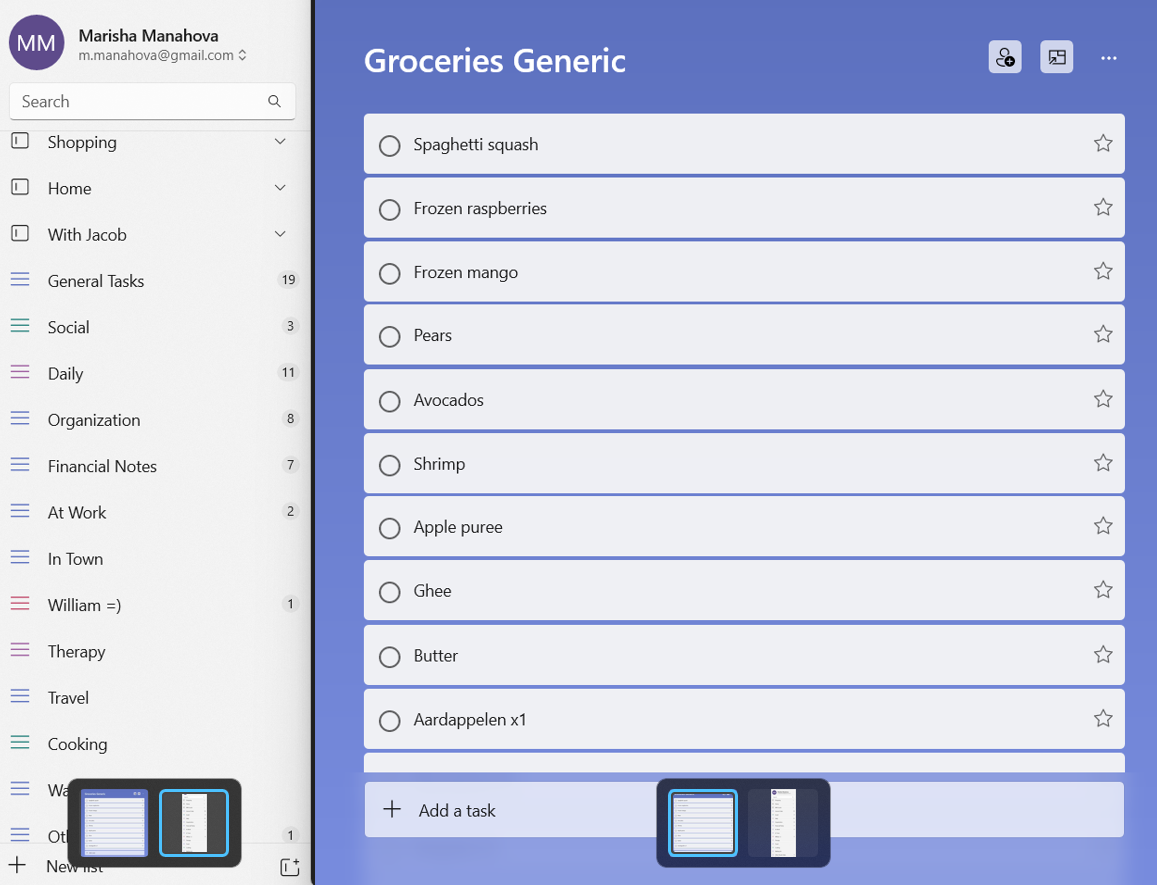
I use a digital list tool (currently Microsoft To Do) to keep track of my lists, for instance:
A screenshot of my list tool.
And I also use Trello to keep track of my workflow or of big projects such as clutter clearing and renovations:
An excerpt of my Home Trello board.
These are all super useful, and I will not stop using them. But there’s also a different use for paper planning…
Daily planning on paper
Some months ago, I felt the need to do a brain dump on paper. I’d wake up in the morning and have all kinds of thoughts swimming through my mind:
“I’m working on my website today.”
“And I need to do a load of laundry.”
“Oh, and I should start the beef in the instant pot.”
“And I need to order throat spray for William.”
“I really shouldn’t forget to…”
And on an on. Since I’ve been working at home, this has become even more of an issue because everything happens in the same space, and I can potentially do all these tasks at any time in the day. After a while of this, I knew I needed a change.
I bought pretty daily planning paper and began to write down all my tasks for the day on there.
I created a little ritual where I’d sit down after breakfast with my calendar and my to-do list and plan the day out on paper. Then, as I completed each task throughout the day, I’d check it off. It ended up being very pretty.
Why not do it digitally?
Now, you may point out that you can do this easily in any online list tool, and you’d be correct. For instance, Microsoft To Do has a nice ‘My Day’ function that I could have used.
But I had this strange need to do this on paper. I wanted to be able to walk past my desk throughout the day and glance at my list and check off items.
I’m also trying to spend less time on my phone. Every time I checked my list on my phone meant that I was holding my phone in my hand and could easily check my messages, email, etc. I’m making an active effort to do this less often, so it made sense that I’d avoid my phone when possible.
I also love planning on paper. I wish I could use a paper agenda with its beautiful pictures and fancy paper, but it is so much less convenient than an online calendar that I doubt I’ll ever go back to it, alas. But the daily planning on paper actually offers me some benefits and feels slightly decadent.
Do I do this every day?
I did do it every day at first but not anymore. Sometimes it feels repetitive, and then I don’t do it. If the day is mostly a work day, I have my work tasks on Trello, and I’m spending most of my day on the computer anyway, so I have no use for a paper version.
An excerpt of my Work Trello board for this week.
But on a day when I’m mostly doing housework and activities with William (Thursday and Sunday for me), I don’t spend much time on my phone or computer. In those cases, I use my daily planning, and it allows for a lot of flexibility. This past Sunday, for instance, it looked like this:
My daily planning last Sunday morning.
After a while, William found it, and then it had ‘drawings’ all over it. He really enjoys drawing on my fancy planning paper:
William joins the daily planning process.
Anyway, we both had fun, so it was good!
Do you prefer to plan your day using digital tools or paper?
Nothing requires flexibility like an ill child. I may have a great plan laid out for my day, and yet if William gets ill, I immediately switch it all around.
This used to really bother me, and while I don’t love changing all my plans around, I don’t find it as disruptive anymore. First of all, I’ve become used to the fact that William gets ill once in a while. I can’t predict when it’s going to happen, but I can be sure that it will happen at some point. By now I know what I need to do in response to different symptoms and situations, and if I’m not sure what to do, I know where to find help.
So, in a sense, while I don’t know when he’ll get ill and what I’ll need to do exactly, I know we’ll be able to handle it and we’ll figure out what to do. This allows me not to worry in advance about his getting ill.
What happens to my schedule?
This is where it’s really important to talk about priorities and not a set schedule. Sure, a set schedule is useful under ideal circumstances, and I use it on many occasions. But when the day’s planning needs to be adapted, it’s not as simple as throwing out the schedule.
Instead, I look at what really needs to get done today, what would be nice to get done today, and what can wait until another day. Having identified my priorities ahead of time, I’m ready to move things around in order to fit in the most important things. I don’t waste time figuring out what needs to get done, only to worry that I might be forgetting something crucial.
An example from this week
This past week, William got ill on Tuesday evening and had to stay home on Wednesday when he’s usually in daycare. Jacob works with patients on Wednesday afternoon, meaning he’s not available then. Therefore, we split it up, so that Jacob took care of William in the morning and I worked during that time, while I took care of William in the afternoon and Jacob saw patients then.
Okay, so I had the morning (about three hours) of uninterrupted time. I looked over the tasks for the day (arranged in sequence as they’d usually happen throughout the day):
Prepare slides for presentation
Practice presentation
Email and admin
Exercise
Cook chicken
Cook cauliflower
Walk
The first two tasks were certainly the most demanding in terms of concentration, and they were time-sensitive (I was giving that presentation the following week). So I spent about 2.25 hours preparing my presentation and practicing it. If I’d had the whole day as I had planned, I’d have worked on it for longer, but given the situation, this was good. After that, I quickly changed into my sports clothes and exercised for 30 minutes. It wasn’t ideal because I would have preferred to exercise for 45-60 minutes, but it was better than nothing. Don’t let the perfect be the enemy of the good.
Then, I took over caring for William. We had lunch, and then I put him down for a nap. (To be honest, I took a brief nap with him.) Afterwards, I tackled email and admin tasks: they required some concentration, but they were much easier to do than preparing my presentation.
I got through most of the admin tasks when I heard William calling me. He usually naps for 1.5-2 hours, but this time it had only been 50 minutes. No surprises, when he’s ill, he tends to wake more. I went and cuddled him, trying to help him get back to sleep. This sometimes works and sometimes it doesn’t; today it didn’t work. William wanted to get up, so we got up. I left a couple of admin tasks for tomorrow–not my favorite thing to do, but it happens, oh well.
Now, the question became how to cook given that William only wanted to cuddle. I pulled up a chair for him in the kitchen with me and let him watch. I had an elaborate recipe planned for the chicken, but instead I went for a very simple one. We’ll still get to eat, and that’s what matters now. I also cooked the cauliflower mash, which fortunately is rather simple and one of William’s favorites to observe since it involves using the handheld mixer.
Next up on my list was going for a walk, which I usually combine with picking up William from daycare. Since I obviously wasn’t picking him up today, this was a difficult one. Also, he had a fever and it was quite cold outside, so I didn’t feel like taking him out in the stroller. I decided to skip the walk today; not everything can get done, and that’s okay. I already got some movement in in the form of exercise, so that’s good.
We had about an hour left before dinner, and William and I played together. He didn’t have a lot of energy, so we did quiet activities such as reading books (so many books about tractors), drawing (so many trains), and building puzzles (with both tractors and trains!). We don’t usually have a whole hour to play, so I enjoyed this. Extra William time!
After this, William and I had dinner and went through the bedtime routine, after which he fell asleep. He was in bed one hour earlier than usual–he was so tired from being ill. This meant I had an extra hour to myself! Jacob came home from work (tonight was a late evening for him), and we spent some time together. We went to bed a little bit early because who knows what the night ahead will bring! An ill child is certainly unpredictable, and we wanted to be ready to respond if necessary.
Flexibility with priorities
I was able to adapt my planning for the day because I knew clearly what my priorities were. I also knew where I could get some uninterrupted time (e.g., while Jacob was taking care of William), some semi-productive time (e.g., cooking with William next to me), and some time that had to be dedicated to him (e.g., extra cuddles, dinner, play).
Note that this day turned out pretty well given that we had an ill child at home. Sometimes, this isn’t possible if the child is very ill or if you don’t have another caretaker at home. That has been the case for us as well sometimes, and it just is what it is. Fortunately, it passes–everything is a phase, right? If you’re in that phase right now, I feel for you, and I’m sure I’ll be there at some point again.
Not every day can be made moderately productive, but the point is that we can have awareness of our priorities, opportunities, and possibilities, so we can make use of an opportunity when it comes our way.
I’ve been caffeine-free for 28 days today. Crazy, I know.
How it started
Many people who know me are aware of the fact that I don’t drink coffee. I looove coffee, don’t get me wrong, but it makes me jittery and anxious. I realized this years ago, stopped drinking coffee, and immediately felt more at ease.
Now, I’ve been a fan of green tea for a long time. I was having one tea in the morning and one tea in the afternoon, and I loved the energy they gave me. It made me excited about the activity at hand, but also I easily became nervous if a mildly stressful event occurred. I noticed that green tea made me more excited, but it also made me more anxious.
For a long time, the trade off was worth it. I was working on my PhD thesis, analyzing data or writing papers, both tasks which require perseverance and concentration. My green tea helped me in that regard. (Note on black tea: I looooooove black tea, but since its effect is stronger, it quickly became too much for me, so I had to limit it.)
Things weren’t so great anymore
For years, I’d had about one headache per week, but I could easily get rid of it if I took a painkiller. (I really needed that painkiller because the headache was so strong that I couldn’t function anymore, and it wouldn’t go away even after a full night’s sleep.) I just thought, “Well, I guess I’m prone to headaches,” and left it at that.
Over time, my headaches became more frequent and more intense. During the last couple of months, I was having two or three headaches per week, and sometimes a painkiller (or even two) was not enough to ease the pain. I was becoming concerned. I’d heard that headaches may get worse with age, but I had hoped that wouldn’t be the case for me.
Also, as much as I didn’t want to admit it, I usually felt a light headache set in after I drank my tea. Sometimes it dissipated an hour or two later, but sometimes it lingered and intensified. I tried to ignore this fact as long as possible… until the side effects of the painkillers got too unpleasant (stomach pain and bloating) and the painkillers weren’t easing the headache anymore (which was super scary).
I’m not sure how this works exactly because caffeine is a pain reducer, so I’m not sure why I was getting headaches from drinking tea. One possibility is that the tea made me more tense, so I tensed my shoulders and neck, and that gave me tension headaches.
Beginning the caffeine-free experiment
The time had come. I really wanted to be pain-free, so it was worth it for me to try getting rid of my oh-so-favorite tea.
On one Saturday morning, on August 27, I simply did not drink tea. I drank water with electrolytes, and that was it. I missed my tea terribly. Same thing in the afternoon.
I have to say, I was a bit tired (my body was missing the effects of the caffeine), and I started getting a light headache before lunch. Then, I had lunch and took a little nap (10-15 minutes), and the headache was gone. I also developed a light headache towards bedtime, but sleeping alleviated it. (This was definitely not the case in the past! I’ve woken up multiple times because a headache was so bad I couldn’t sleep.) Clearly, I was experiencing withdrawal effects.
This continued for the next 5 days or so. I was more tired than usual, and I developed light headaches, but nothing like what I was used to. I didn’t need to take a single painkiller.
I was withdrawing from green tea, can you believe it! My teas were rather strong, to be honest, so perhaps it’s not that surprising. I made the transition period easier by sleeping enough (also taking a power nap in the afternoon) and drinking water with electrolytes. And just letting the time pass by.
The consequences
After those first five days, I felt I was quite adapted to being caffeine-free. My energy returned to its previous levels, and I felt perfectly fine without tea, something I considered impossible before.
Perhaps best of all, my headaches were gone. Gone!!! It’s been 28 days now, and I haven’t taken a single pain killer because I haven’t had to. I haven’t had a single headache! It’s truly unbelievable.
Also, an unexpected side effect is that I’m less anxious and more content. I realized that this low-level anxiety was making me more uneasy and critical. Once this critical voice subsided, I became more content. It’s a strange feeling, being content, I’m still getting used to it. In a way, it’s boring because it’s lower-energy. But at its core, it makes it easier to be at ease and just be.
What do I drink now?
To be honest, I am a bit annoyed that I can’t drink coffee or tea. I really, really like the taste of coffee and tea, so why can’t I drink them without getting headaches or becoming anxious, when most of the human population doesn’t seem to have any problems? It’s not fair!
And yet, it’s true that it’s not fair, but it’s useless to get stuck at that (as Dr Brooke says). Instead, I can focus on what works for me and enjoy my life.
I’ve discovered a new elixir of life: my cacao drink. I put a teaspoon of raw cacao powder in a cup of warm water, and I add several drops of a stevia-based sweetener. It’s absolutely delicious! (Let’s hope this one doesn’t end up having unpleasant side effects…)
How about caffeine-free coffee and tea? I’ve tried them both, but unfortunately both seem to give me light headaches, and the coffee makes me weirdly light-headed. I may try again in the future, but for now I won’t be drinking those.
Also, I’ve heard wonderful things about adaptogen mushroom elixirs (such as these), and I’d love to try them as well sometime. For now, I’m sticking to my cacao drink.
Finally, I drink lots of electrolyte water! Most of the time, I mix it myself by adding sodium chloride, potassium chloride, and magnesium malate in my water bottle. But once a day (usually in the afternoon), I drink an LMNT because they are so delicious and they make me feel amazing! (Watermelon is my favorite.)
Note: The links are purely for information purposes. I don’t make any money if you purchase anything via the links because they are not affiliate links 🙂
Image: Me showing off my favorite coffee/tea/cacao mug with a sheep!
Have you ever gone caffeine-free? If so, what was your experience?
Okay, so I’ve been freaking out a little bit lately.
My PhD defense is coming up in 4.5 weeks. It will be fine. No biggie.
And I started my business where I’d like to coach people on designing their lifestyle, setting priorities, and reaching their goals. Will it go well? No idea.
I’ve been looking forward to these events for years, but they’re scary nevertheless. I spent 8 years at the Donders (2 years for my master’s and 6 years for my PhD), so leaving the institute marks a big transition. Change is exciting and stressful, both at the same time.
My #1 tool
I’ve discovered that the best way to calm myself is by putting things in perspective. It works like a charm, but the key is to really see things in perspective, to really feel it.
I ask myself, “What is my #1 priority?”
Answer: “My family.”
Follow-up question: “Are we all okay right now? Are we all healthy? Is any of us in danger?”
Answer: “Actually, we’re all fine.”
Conclusion: “The most important thing is there. The rest will be fine.”
We’ve been in and out of hospitals during the last year, and we’ve lost several close friends and family members. Life puts things in perspective like nothing else.
This is the most powerful tool for me, but unfortunately, you can’t hack it. I’ve tried to use it in the past, and I just didn’t feel it. I thought, “Yeah, yeah, we’re fine, big deal. I’m still stressed!” But recently, something shifted. I guess it’s gratitude for things being just normal.
My #2 tool
This tool is super simple. It has to do with the present moment.
I’m standing in my kitchen, freaking out about my defense. I ask myself, “Right now, in this moment, am I okay?”
Answer: “Well, yeah, the defense is 4.5 weeks away, so I’m actually okay right now. I don’t have to defend my thesis right now.”
This works in most situations. Even when I’m on the podium during the defense, I can ask myself, “Am I okay right now?”
Most likely the answer will be: “Well, yeah, right now, I’m answering a question kind of alright, so I guess I’m okay.”
Most of the time, our fear is about the future, but in fact in this current moment, we are okay.
My #3 tool
This tool recognizes that there are different parts of me and that I have different, sometimes conflicting, feelings.
For instance, one part of me is scared, and another part of me is excited.
One part of me doubts whether I’ll make it (e.g., the defense, the business, being a good mom, etc.), and another part of me knows it will be fine somehow.
Both parts of me are there. Both things are true.
I find this super calming for some reason. The fear is not any more true than the excitement or the joy. Both are true. (Btw I got this idea from Dr. Becky Kennedy.)
What are your favorite tools for when you’re freaking out, stressed, or anxious? I’d love to hear!
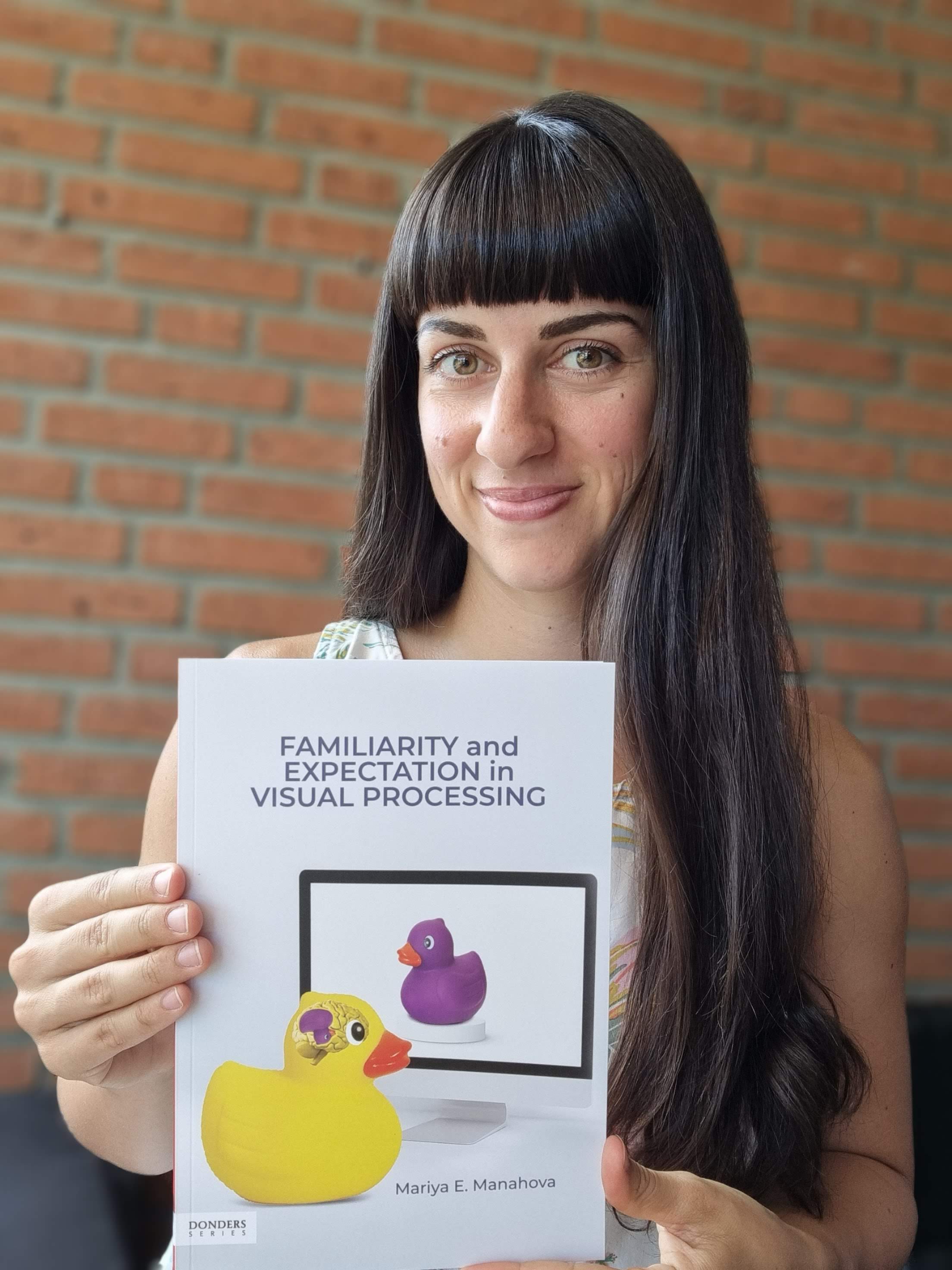
I just received my books from the printer–my PhD thesis printed as a book! It’s truly an astounding moment. I can leaf through this book and know that I wrote every page of it… crazy.
It was certainly a journey of perseverance that got me here, and I’d like to share the main steps along my writing path.
My PhD thesis describes my empirical research in neuroscience, which includes reading papers, coming up with a research idea, creating the research design, getting feedback, carrying out the experiment (collecting data), analyzing the data (lots of analyzing…), getting feedback, writing a paper, presenting the results, and getting more feedback. (Do you see a pattern with all the feedback?)
What’s in a PhD thesis?
I started my PhD in October 2016, so I did research for five years before beginning to put together my PhD thesis, and fortunately I already had two published papers, which became chapters 2 and 3 of my book (you can find them here and here). I finished another experiment towards the end of 2021 and wrote that up to become chapter 4. (I’m glossing over this part a bit, but writing a chapter or a paper is a lot of work on its own. However, I’d like to focus on something else here…)
Then came the hard part: writing the introduction and discussion. The introduction became chapter 1 of my thesis, and in it I aimed to summarize the main theories in the field and explain how my research answers an important question. It’s a difficult part to write because it starts out very general and all-encompassing (e.g., what is visual perception), and yet it needs to become very specific (e.g., explaining how my experiments inform the field).
Break it down
I felt that writing the introduction was daunting. It felt like a big thing looming over my head. Could I do it? I decided to apply the approach I advocate to other people: break it down. Identify the small parts and focus on one at a time. A small part is much less daunting, and I felt like I could handle one small part to write.
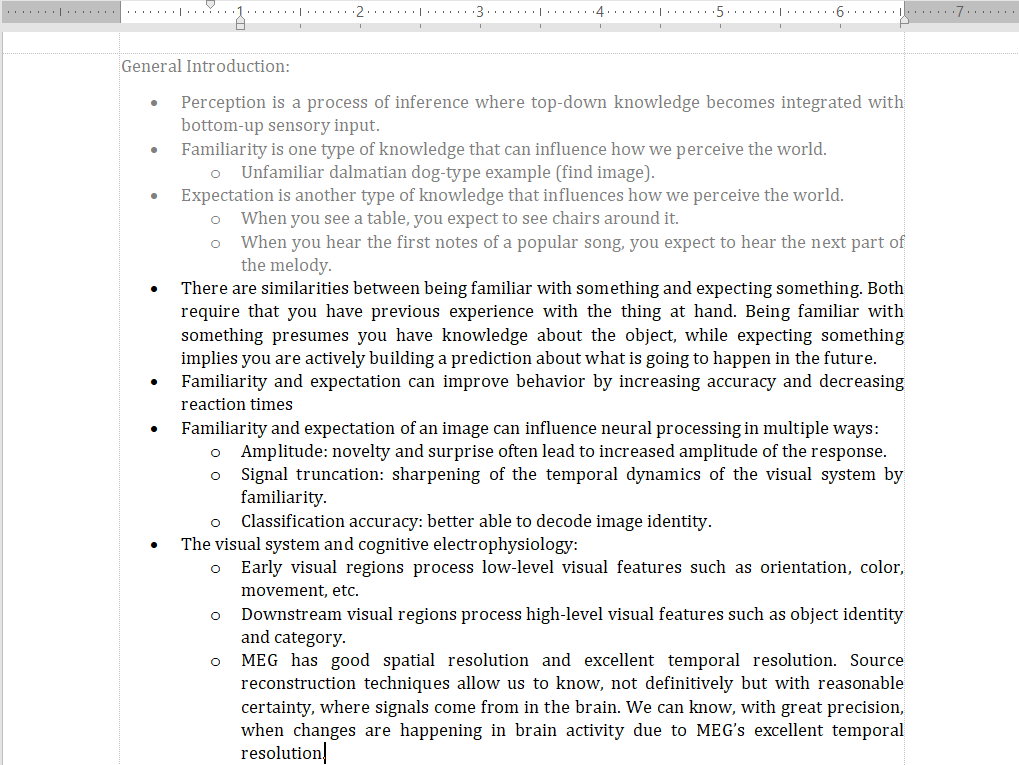
I broke down the big introduction into paragraphs, and I tackled one paragraph at a time. In order to do this, I created a detailed outline, where one sentence indicated one paragraph. The text color was black, and as I completed a paragraph and moved on to the next, I changed the color of the completed paragraph to gray. Early in the writing process, my outline looked like this:
An excerpt from the outline of my introduction.
In the end when my introduction was complete, the whole outline was in gray. Ah, was that a gratifying sight! Then, I received feedback from my supervisor and edited the text, after which the introduction was DONE!
In the flow
It was time to write the discussion. This is the part where I bring my research findings together and integrate them with the rest of the field. Basically, I explain what my work has contributed to our knowledge and how it fits with the rest of the research. I approached this in the same way: I made a detailed outline where each sentence indicated a paragraph and tackled one paragraph at a time.
Wow, was this part fun! The reason we do research in the first place is because we want to expand our knowledge, we want to contribute to the understanding of the brain, in my case. And in the discussion, I had the opportunity to go wild and explain what we know now, what we don’t know yet, and speculate about what could be the ground truth… exciting!
The fact of the matter is, though, I had time pressure during this part. My husband’s father was very ill at that point, so we chose to visit Jacob’s family in South Africa. We booked our flights, and I had five days to write the last 2-3 pages of my discussion. This may not seem like a lot, but it involves lots of reading papers, thinking, and synthesizing information.
I experienced laser focus during those 5 days. I wrote my conclusion (the final part of the discussion) on Saturday morning (our flight left on Sunday). I wrote for 4 hours straight in the bedroom, occasionally uninterrupted by William who was curious about what was keeping mama so busy on the laptop. Finally, I was done! It’s crazy how circumstances can truly cause us to focus sometimes.
Practicalities
This was hardly the end of the process, however. There are lots (and I mean LOTS) of practicalities that need to be completed after finishing the writing part. I compiled a Trello board with all of them and checked them off one by one as I completed them (this is only an excerpt and by no means the entire list of tasks):
Some of the tasks I had to do after completing my PhD thesis.
There were lots of little tasks to keep track of, and I’m glad I used my favorite Trello boards, lists, and cards to keep track of everything. I am still doing this now as I am organizing the defense and the events around that. It’s exciting to be organizing my defense, but I could also easily get worried about forgetting some small but crucial step. Fortunately, this method allows me to stay calm as I take care of tasks, one by one.
It was a true joy to receive my books! Wow, what a process it’s been to get me here… Now I get to enjoy the end product and defend my thesis, of course!!! More on that coming soon!
Up until a week ago, I’d never been away from my son William for more than a day. For two years and three months, I’d always woken up in the morning and found him there, either next to me or in the other room, as he got “older.”
This probably wouldn’t have been the case if it weren’t for Covid. William was born four months before Covid started, so his two years of life have been affected by the changes. I’d have gone to several conferences already, but they all got canceled. I didn’t go on any non-family trips, and when we visited Bulgaria (twice for the last two years), William came with me, so we were always together.
Shall we travel to South Africa?
Recently, the restrictions for traveling to and from South Africa were lifted. Jacob is from South Africa and his family lives there, so he was enthusiastic to go there after not having visited them for four years. It would also be a great experience for William to visit his grandma and grandpa, aunt and uncle, and to meet his cousin. Also, it’s summer right now in South Africa, giving him the opportunity to soak up the sun, play in the little pool, and eat exotic (for me) fruit – what a dream!
My heart tightened as I realized I wouldn’t be able to go with them. For visa-related reasons, I wouldn’t be able to travel with them. Could I really let William go so far away from me for ten days? I wanted to let them go in order to have this amazing experience. Yet, I didn’t know if I could bear missing them so much.
Saying goodbye
We bought their plane tickets one week before their departure date (crazy!), and we packed their bags. The anticipation was the worst part for me. I was wondering how the flight would go and how William would adjust to being there. At the same time, I know he’s crazy about his dad (in fact, papa is currently the preferred parent, and mama is taken for granted a bit, but I’m okay with that and I’m taking it as a sign of secure attachment), so he’d be happy to be with his dad all day for ten days. And Jacob’s family in South Africa would be overjoyed to have William there and would take care of him all the time. Thus, I wasn’t too worried about them.
Saying goodbye was tough. I drove with them to the airport and went with them to the check-in desk to help with William and with the luggage. When they were ready to head to the gate, we said goodbye, and that was the hardest moment for me. William didn’t quite understand why I was saying bye bye to him, and he had a confused look on his face as they walked away, Jacob holding him in his arms. He didn’t cry, but he just kept looking at me over his father’s shoulder until they disappeared from view into the crowd.
I walked back to where we had parked the car. It was strange, almost eerie. I was now a single woman walking down the airport hallways, just as I had been ten years ago traveling back and forth to the US two-three times per year. Almost every time I traveled to or from Bulgaria to the US, I flew via Amsterdam, so I knew Schiphol airport so well. It was a weird throwback to be walking here again now first with my husband and son and then without them. Ten years ago, I had been a young woman walking down those corridors full of ambition, enthusiasm, and a desire to prove myself, while also full of fear. Today, I was there again, more confident and secure in myself, my husband, and my son, but also felt sad to have let them go and felt emptiness in the place of enthusiasm.
Fun, but strange
The first few days were tough. I missed them terribly–there’s no other way to put it. But I was also really excited about having time for myself! It had been forever since I had ten days for myself, and I was going to make the most out of them. I allowed myself to be sad when I felt sad, but I also did lots of fun things.
During that first weekend by myself, I went out to dinner with a friend, I did a tutorial for no-heat overnight curls (totally didn’t work for me, my hair was straight again within 2 hours), went for a hike in the sunny forest, and even went to the sauna (spa center) for a day! How cool is that?! I was supposed to go with a friend, but she got ill the night before (so unfortunate!). I still ended up having an amazing time! I spent eight hours going into saunas and swimming pools, attending meditation “classes” in the sauna, having an amazing dinner there, and reading my book in the relax area. I have to say it was a little bit lonely because Jacob and I used to go to saunas together and I missed him, but it was still wonderful.
As nice as my fun experiences were, I felt a bit lost. I felt like I was constantly forgetting something important, or that something was not quite right. I think it was an adjustment, and I needed some time to get used to the new situation.
Weekdays by myself
Monday came along, and I focused on work. Now that we’re allowed to physically go to work, I used the opportunity to be there in person. I got myself to get up on time, promptly get ready, and be at work by 9:00. This gave me a good three hours of focused work where I read papers and wrote parts of my PhD thesis. Frankly, I was amazed at the progress I was able to make in a week.
I realized why I was able to make this happen. When William is around, I get him dressed, give him breakfast, and bring him to daycare. As much as I love my time with him, this simply takes time: time that I was now able to use to write. Simple, but I’m glad I was able to harness this to make the most out of my time by myself.
Then, I had lunch with colleagues every workday. I’d forgotten how much fun that was! When working from home, I’d just keep reading papers or answering emails while I ate lunch. Now, I actually went down to the canteen and talked to people. Ah, the perks of ordinary life!
After some more work in the afternoon, I’d go home and exercise or cook–whatever was on the schedule for that day. Then, at the time when I’d usually pick up William from daycare, I went for a walk to the Goffert park. Luckily, the weather was gorgeous this past week, so these walks were lovely. I did feel a pang of sadness when I saw parents pushing their children in a stroller, but at that moment I was doing my own thing and enjoying it.
In the evenings, I’d have dinner, watch a TV series (how decadent!), shower, and read. Watching an episode of a series felt super luxurious to me because I don’t often do that. It was just something fun I did because I wanted to. I usually spend time with William in the evenings, playing with his cars, building puzzles, reading to him, and putting him to bed. I will be happy when he’s back and we can do those things together, but I also enjoyed the me-time I had now.
It was also nice to take uninterrupted showers. Usually, William comes in five times while I’m showering because he can open and close the door now, and he loves doing it. Then, we end up playing peek-a-boo since he thinks I’m hiding behind the shower curtain. That’s adorable, and I miss his little face! But it is also meditative to be able to take a shower uninterrupted, all by myself.
I should also say that I spoke to the men several times every day. They were doing excellent, and it was great to see how much fun they were having. I didn’t have to worry about them at all, and my mind was at ease.
It’s funny that this combination of simple routine and decadent me-time (watching Netflix) worked so well for me. A weekend packed with fun and relaxation was nice, but it was so out of the ordinary that I didn’t feel grounded and felt like I was forgetting something important the entire time. While on the days when I combined work, fun, and self-care, I felt the best. This just goes to say that we don’t need our days to be extraordinary; we just need them to contain the right ingredients to create the lives that we want to live according to our own design.
The last few days
I have my last weekend alone now (the men are coming back on Sunday morning). I have four social activities planned in three days, and I’m very much looking forward to them! At the same time, I’m looking forward to the arrival of my men. I can’t wait to drive to the airport on Sunday morning and pick them up! I’ll enjoy my me-time now, and then I’ll enjoy being with them when they’re here. And then I’ll get interrupted the whole time by “mama, mama, mama,” but that’s quite alright.
It’s been eight weeks now since my pregnancy ended and we lost our baby, but it feels as though it’s been much longer. A lot has happened in these eight weeks, and at the same time not much has changed – in a sense, it’s as though life returned to what it was like pre-pregnancy. At the same time, we did go through more than half a pregnancy, so it’s not like things can just go back to the way they were before.
Taking time off
I was on sick leave for 6 weeks after the delivery in order to recover. It was like maternity leave, on the one hand, because it was after a delivery, but I didn’t have a baby to take care of, so it really didn’t feel like maternity leave. At first, I was surprised at my obstetrician’s suggestion to take sick leave (because the law doesn’t allow maternity leave until 24 weeks of gestation, and my pregnancy ended at 21 weeks). “Do I even need sick leave?” I asked. “Yes,” she insisted. “No work for 6-8 weeks.”
“Wow,” I thought, “Okay, apparently, this is a big deal.” And I’m glad I took time off. I was so exhausted those first two weeks, physically and emotionally. I look at my calendar for those days, and what do I see? “December 30 (2 days after delivery): Buy groceries.” Jacob, William, and I went and bought groceries together, and it was my first time out of the house (except for going to the hospital) in more than two weeks. It felt like such an event, and at the same time I was in a haze because of fatigue, shock, grief, etc. What a big deal it is sometimes to go out and buy groceries!
During those first weeks, I did simple things such as do some gentle movement, go for a short walk (started with 15 minutes), take a nap, talk to a friend. When I cooked a meal, I lay on the couch to rest afterwards. I also did things on my laptop such as making the annual family photo album (every year, I make an album with our favorite pictures for that year, and it’s super fun!) and the yearly review. The point is that it helped me to keep myself somewhat busy with pleasant activities and taking care of William, but I also took lots of time to take care of myself and to rest.
Beginning to work a tiny bit
After 3 weeks off, I felt I wanted to do a little bit of work again. I knew I didn’t have to, but I wanted to be making progress towards my PhD. I was still relatively tired, but I had more energy and was able to concentrate better. So I blocked out 2 hours per day (10:00-12:00) 4x per week to work on the chapter I had been writing. It seems like a very small amount of time (8 hours per week), but I was able to make some progress.
Most importantly, writing my chapter gave me the feeling that I was accomplishing something, and that’s what really mattered to me at that point. In a situation where I could control almost nothing, this was one area where I could actively focus my efforts, and that felt good.
I also made sure to do all the other things: do gentle movement, walk, nap, meditate, cook, and take care of the family. And sleep. Lots of sleep.
Returning to work
Two weeks ago, on February 14, I returned to work. It felt exciting! I had 3 months to finish my PhD, so I was (and still am) in go go go mode. Not feeling stressed, to be honest, but more in a “Let’s do this!” mindset.
Interestingly, my daily schedule remains similar to what it was before: I work (mostly write) in the mornings 4x week and avoid distractions at that time. Then, I have lunch and do some admin and tasks that require less focus. Afterwards, I cook or exercise, followed by a little walk on the way to picking up William from daycare. The self-care is still there, although I rarely take a nap anymore.
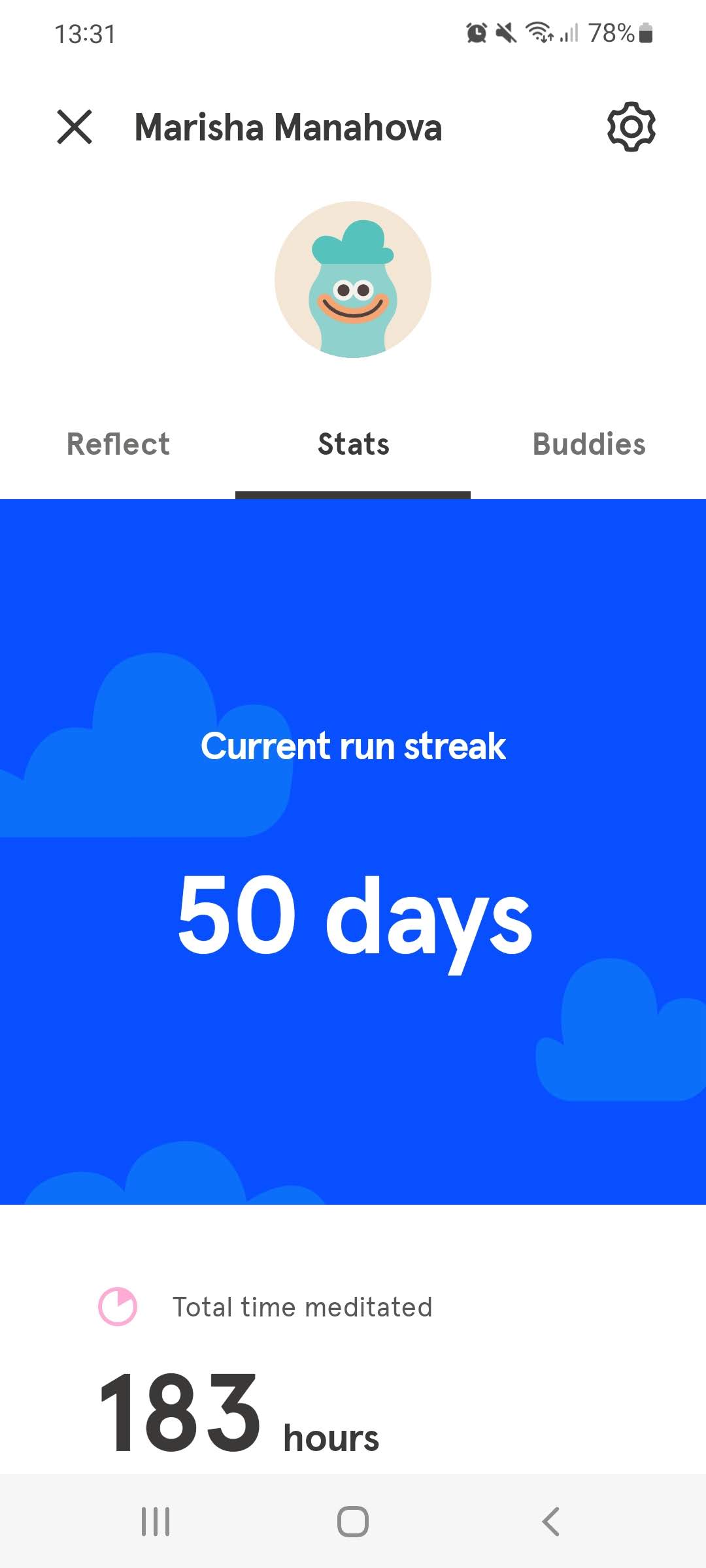
(Fun fact: It’s difficult for me to fall asleep for a nap, so I tricked myself into napping by listening to a meditation while lying in bed and falling asleep in this way. I did it every day for 50 days!!! Seriously! I got a 50-day streak in my meditation app, but since I don’t nap anymore, I’ve lost my streak… 😦 )
I’m also feeling more social again, meeting up with friends and looking forward to chatting with colleagues as well. And I’m really into watching movies!! I’m re-watching all the Harry Potter movies, then all the Matrix movies and all the X-Men movies since Jacob loves those as well. (Tangent: Maybe I’ll re-watch the Lord of the Ring movies as well because I really don’t remember what happened there. My recollection is the following: hobbits partying, Gandalf shows up, they meet some elves and some dwarves, they walk a lot, then they go fight some other people, oh, and Smeagol shows up at some point, then there’s a massive fight with lots of people, and then Frodo is standing near some fire and looking at the ring… Yeah, I think there’s more to this classic epic, and I need to discover it properly.)
Grief as a part of everyday life
What I’ve been saying so far is that life appears to have returned to normal rather quickly for me, almost too quickly. There’s fun and joy in my days, there’s purpose in my work and taking care of William, and there’s also everyday, routine stuff that need to get done. But I’d be lying if I said that was all of it.
Take this example: I’m walking down the sidewalk, and I see a pregnant woman with a big belly. I look away. Good for her, I think. I do the mental math in my head: at this point, I should have been in the 7th month, and I would have had a big belly like her. But I don’t. Keep walking. Just keep walking.
A couple of friends and I got pregnant around the same time. My due date was May 9, and theirs are in May or June. I can’t imagine what it will be like to visit them and their babies once they are born. I try not to think about that. I also try not to distance myself from those friends. They are dear friends that I care about, so I try to stay open and meet up with them. I am happy for them and their babies, and I am sad for myself and my baby. The two feelings can co-exist.
I went to the dentist for a dental clean yesterday. I noticed the dental hygienist was a bit confused, looking at my belly. “It says here you are pregnant at 29 weeks…?” “Oh,” I say, “We lost the baby at 21 weeks.” She says she is very sorry and how hard it must be. “Yes, it is very hard,” I say. “But I’m glad we already have one child, otherwise it would have been even harder.” “That’s true,” she says. “But it’s still a very big loss, and it’s very sad.” I only nod. I am grateful that she acknowledged how sad it is and that I didn’t in fact need to soften the situation or make it more comfortable for her. We just allowed it to be sad.
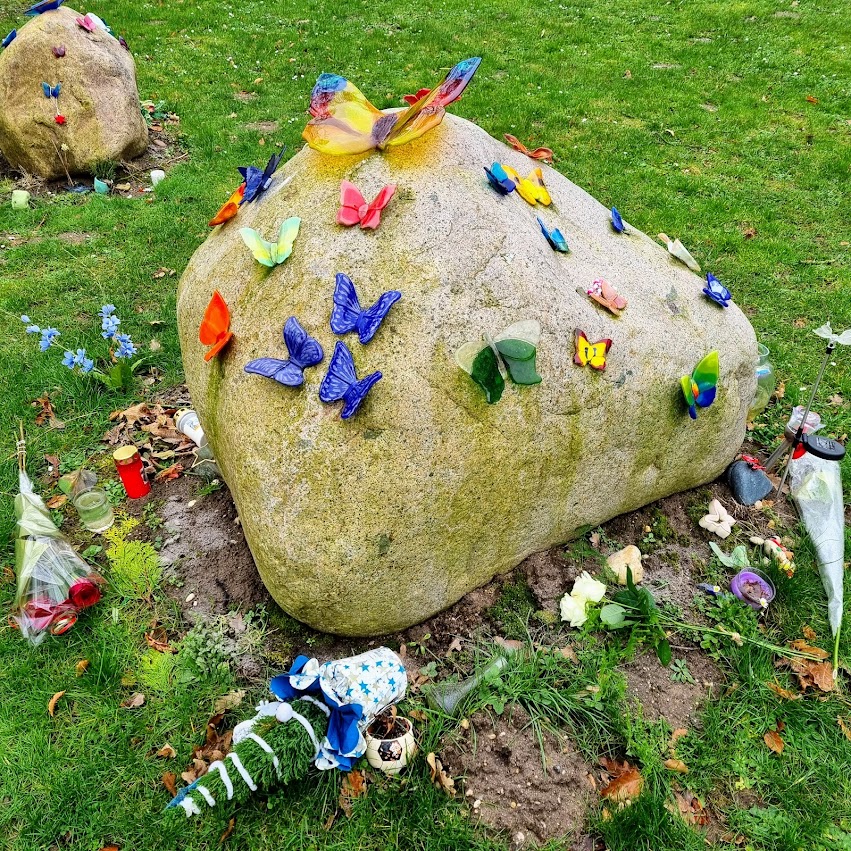
Last Tuesday, on the famous Twos-Day (22-2-22), we had the cremation ceremony for our baby boy. It was done together with other babies who passed away before 24 weeks of pregnancy. We, the parents, got together and walked to a beautiful place next to the crematorium and spread their ashes. There were three rocks with lovely butterflies on them to symbolize the children who didn’t make it. We got to stay there for a bit and think about our babies who would never join us in this world, whom we’d never get to watch grow up, and whose personalities we’d never get to know.
This experience hit me harder than I had anticipated. It uncovered more sadness than I knew was there. It was the last time we had contact, in some way, with our baby boy, and now he really was gone, forever.
Beautiful butterflies symbolizing the lovely children that didn’t make it into this world. At Crematorium Jonkerbos
Moving between everyday life and grief
My therapist, Linda Lansink, gave me this wonderful analogy. Imagine the infinity sign, the number eight lying on its side. Sometimes you’re living in one circle, which is everyday life, joy, fun, etc., and sometimes you’re in the other circle, which is your grief. It is healthy to be transitioning smoothly between the two circles, so normal life and grief become integrated. It can become an issue if you get stuck in one of the circles: either you are only living normal life, denying the painful experience the space it needs, or you become stuck in the grief, unable to live and enjoy life.
Life feels like the infinity sign right now, transitioning between sadness and joy, between the normalcy of life and the exceptionality of our loss. It’s strange how something as jarring as the loss of a tiny baby becomes part of life, integrated with the narratives of our lives. But that’s how it is.
The infinity sign, symbolizing living with both joy and grief. Source: Wikipedia
For those first ten days or so after we lost our baby halfway through the pregnancy, I was in a phase I called ‘brain rewiring.’ A huge change had taken place in our lives, and my mind was struggling to get used to it.
Integrating two narratives
On the one hand, I could remember in vivid detail how I’d given birth to our tiny baby and then we’d had to say goodbye. On the other hand, I kept forgetting that I was no longer pregnant.
At one moment, I was having an intense conversation with a friend about the current state of the pandemic, totally engulfed in big thoughts about the state of the world and no thought about my personal experience. A couple of hours later, I felt such pain and grief that I threw myself on the couch and cried, all thoughts of the global pandemic forgotten.
I kept having thoughts such as, “Since I am no longer pregnant, I can drink wine again,” but they only brought me sadness. I didn’t want to be able to drink wine; I just wanted to be pregnant again.
In fact, I didn’t want to be pregnant anew, but rather I wanted to still be pregnant. I wanted to go back in time and make it as though the events of the past two weeks hadn’t happened. And then I was faced with the stone-heavy realization that that wasn’t possible. In that moment, my heart fell through the floor.
During those nights, I dreamed about a baby and a pregnancy and all sorts of related (or unrelated) things. In the dreams, I carried the sadness of losing our baby, but upon waking, for the first second or so, I thought, “Oh, it was just a dream, thank God! My baby is still here…” And then I’d remember that he wasn’t here and that it was in fact all true. That fact hit me like a train, crushing me. It felt impossible to accept or bear that truth.
Slowly, my brain started integrating the new truth about our life. At the beginning of the process, there was our life on the one side and this terrible, tragic thing that happened to us on the other side. At the end of the process, this tragic event was integrated into the narrative of our life, our world. It had become a part of us.
What is “brain rewiring” anyway?
I first coined the term “brain rewiring” during a heavy break-up way back in college. The change was so painful and difficult that, once again, I was struggling to integrate the world I had known with the world I lived in now. It took a few weeks before the knowledge of the break-up and how that affected all aspects of my life was integrated within me and no longer shocked me with its harshness.
By calling it “brain rewiring,” I took the subjective aspect out of it. It wasn’t that “I couldn’t accept the break-up yet,” but rather “my brain needed time to create new neural pathways to reflect the change.” As you may have guessed, I was a psychology and neuroscience major in college back then. Who would have guessed I’d do a PhD in neuroscience after that?!
The “brain rewiring” stage has been the most painful one for me (so far) during this grieving process. I believe that’s because I was constantly being faced with the shock of what happened and the magnitude of the loss. Beyond that shock, there is pain and sadness that’s about the actual loss and about our baby boy, but the shock makes it impossible to find acceptance for those emotions.
Once I moved through the “brain rewiring” stage, I felt sadness, but it wasn’t anymore the raw pain that hits you head-on. It became more of a quiet sadness rather than a train crushing me. I’m not saying that quiet sadness is good, but it felt more bearable to me.
Thank you, brain
There is something amazing about the “brain rewiring” stage: it seems to me that the brain must be working overtime then. It must take so much work to update so many beliefs, expectations, and memories and to integrate this colossal event into my sense of self. For that, I feel a sense of gratitude towards my brain. Thank you, dear brain, for working so hard to make sense of this, to accept it, and to weave it into the narrative of who we are. I know it’s hard, and I thank you for all you do. (Yes, I speak to my brain. It speaks back sometimes. You can make what you want out of this.)
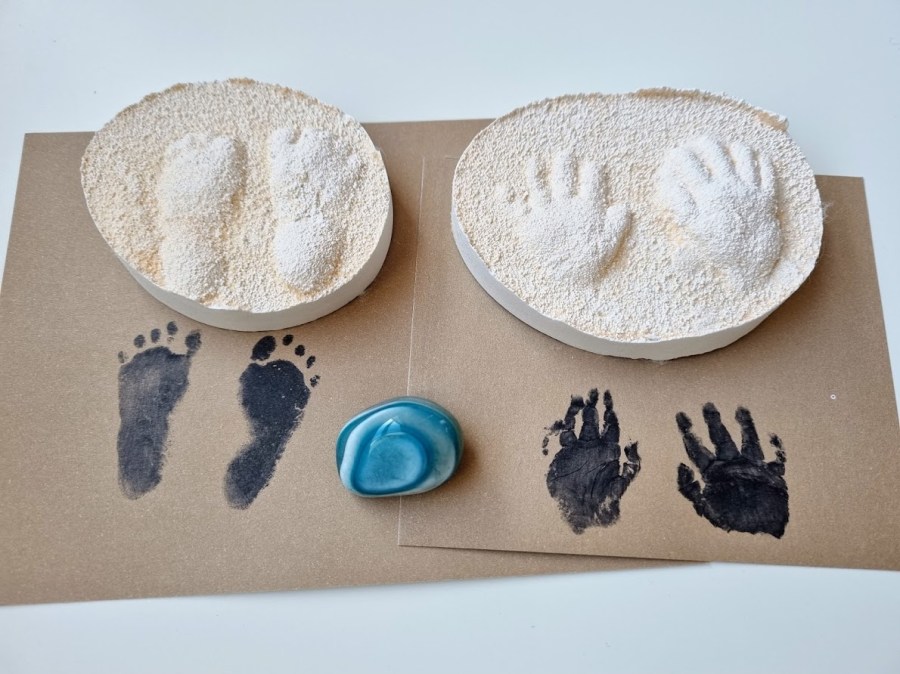
Photo: Prints of our baby’s hands and feet. They are tiny.










 A Good Life